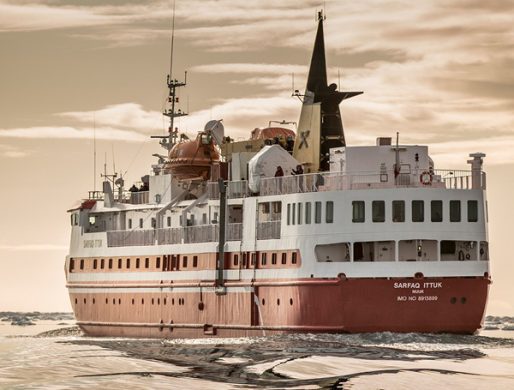
The day begins with a good breakfast. Hopefully, the air is clear and fresh, giving us perfect conditions for a lovely boat trip. Today, we continue towards Igaliku, a beautiful settlement located further inland. We travel by passenger boat from Qaqortoq, passing another settlement, Qassiarsuk, as well as the beautiful Qoorooq Icefjord along the way.
Qassiarsuk – the old Brattahlid
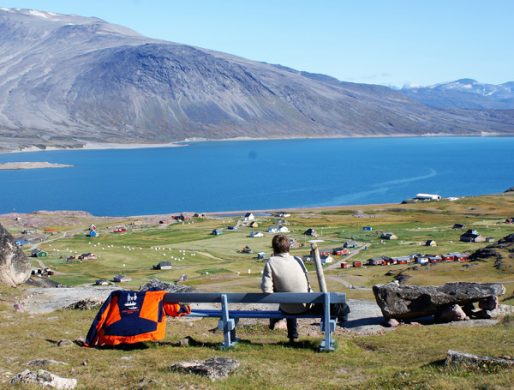
Qassiarsuk is a small settlement on the opposite side of the fjord. Around 50 people live here, many of them working with sheep farming, which is an important part of life in South Greenland. The green fields surrounding the settlement show that the climate here allows grass to grow and livestock to be raised – a rarity in the Arctic.
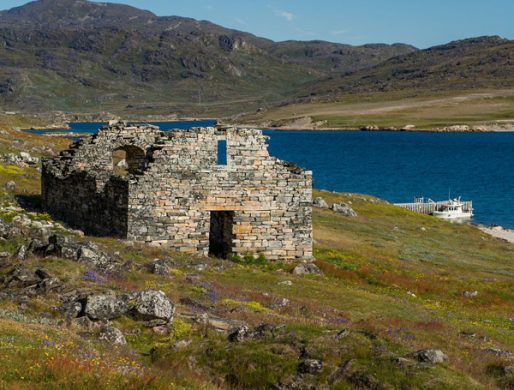
However, Qassiarsuk is much more than a modern sheep-farming settlement. It is also home to some of Greenland’s most important historical remains. It was here that Erik the Red settled around the year 982 and established his farm, Brattahlid, one of Greenland’s first Norse settlements. Today, the site is part of the UNESCO World Heritage area of Kujataa, which tells the story of a thousand years of Norse and Inuit farming and ways of life in this region.
We visit the reconstructions of Erik the Red’s longhouse and Tjodhild’s Church, which provide a vivid impression of the daily lives and beliefs of the Norse settlers. Inside the longhouse, you can almost imagine the smell of smoke and dried fish and picture Erik the Red planning his voyages west – and his son, Leif Erikson, later sailing onwards and reaching Vinland in present-day North America. The surrounding ruins of the original Norse buildings bear witness to a time when farming flourished surprisingly far north in Greenland.
During our visit, we enjoy a simple lunch – a sandwich – overlooking the fjord and the green fields where sheep graze. There is also time for a short walk around the settlement.
Qoorooq Icefjord
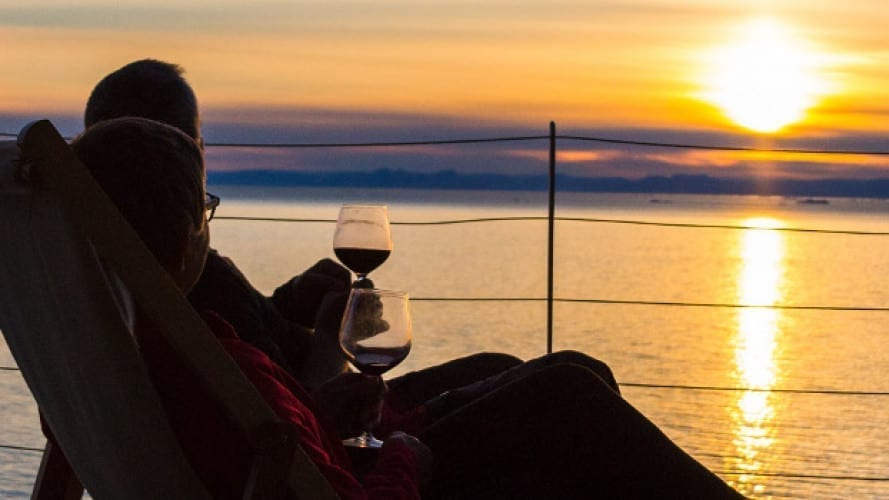
From Qassiarsuk, we continue by boat towards the mouth of Qoorooq Icefjord. Along the way, you can relax on deck, gaze across the mountains and ice, and take in the impressions of the day so far. It is a day full of contrasts – from green valleys to ice-filled fjords, from present-day settlement life to the Greenland of the Vikings – and a journey through both nature and history that you will not soon forget. Soon, we approach the icefjord.
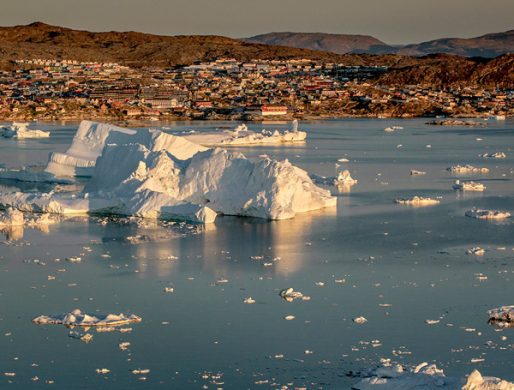
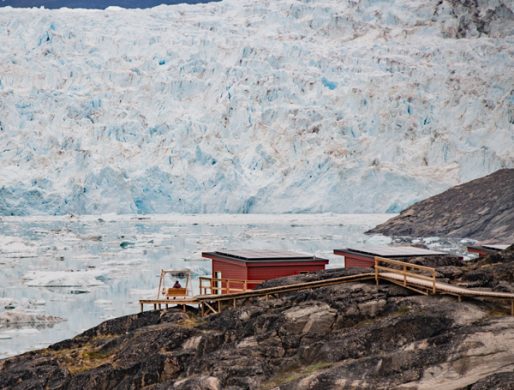
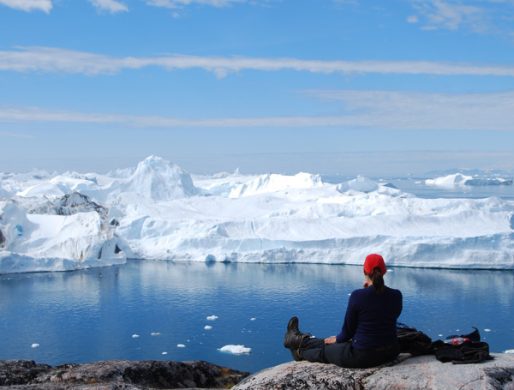
Even from a distance, you can sense the cold and the immense power of the ice, which fills the fjord like a floating landscape of blue and white sculptures. Qoorooq Glacier is one of the most active glaciers in South Greenland, calving large quantities of ice into the fjord every day.
The colors of the ice range from crystal clear to almost turquoise blue, and curious seals can sometimes be spotted swimming between the ice floes. For a moment, the boat’s engine is switched off so that we can listen to the sounds of nature – the crackling ice, the birds and the distant rumble of the glacier. Afterwards, we continue our journey.
Itilleq
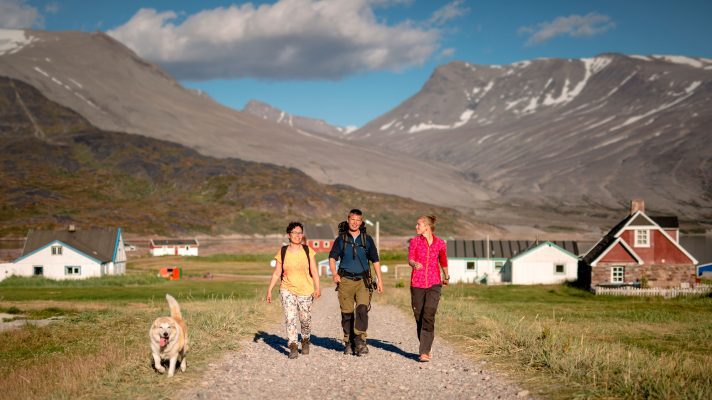
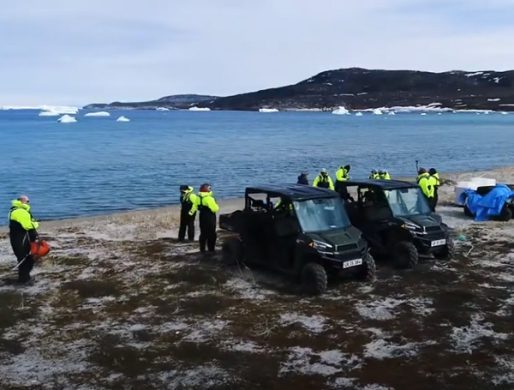
At the landing site of Itilleq, we go ashore. From here, we hike for about an hour along the King’s Road to Igaliku, where our hotel and dinner await us. Our luggage is transported separately, so we do not have to carry it ourselves.
The trail takes us through rolling terrain, with the scenery constantly changing along the way. We pass green valleys and small lakes, while mountains rise on the horizon.
Igaliku
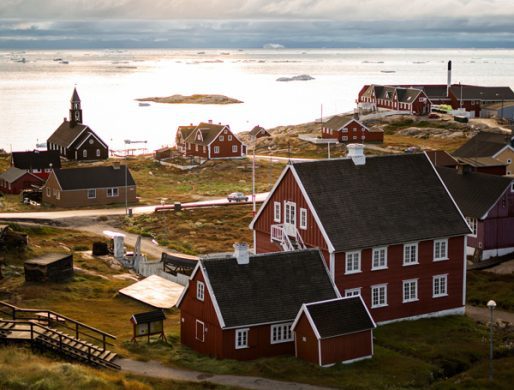
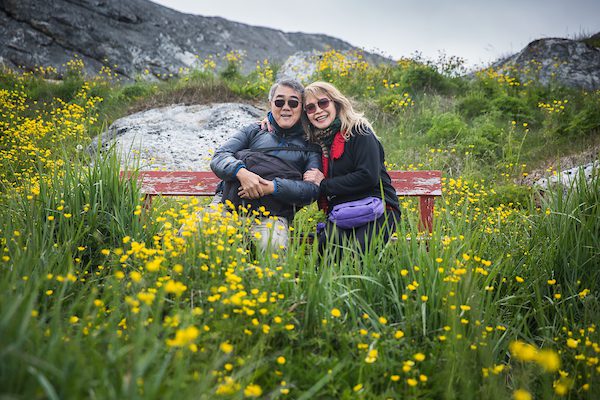
The sheep-farming settlement of Igaliku is beautifully situated at the head of Igaliku Fjord, surrounded by green fields with steep, bare mountains rising behind them. Igaliku is a place that invites you to slow down and explore at an easy pace. You can stroll along the small paths winding through the settlement and admire its simple but beautifully constructed buildings. Enjoy the silence, broken only by birdsong and the gentle bleating of sheep.
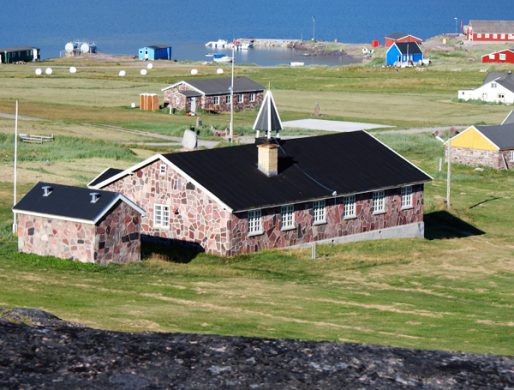
Among the most impressive sights in the settlement are the ancient ruins of the Norse bishop’s residence and cathedral, scattered among Igaliku’s houses and gardens. It almost feels like stepping into another time, with the stones telling stories of a community that lived here more than 800 years ago. The stones themselves are also special: the characteristic Igaliku stone, a multicolored reddish sandstone, gives the entire area its unique historic character. It is difficult to imagine how the Norse craftsmen managed to move the massive blocks of stone that still stand today as reminders of a bygone age.
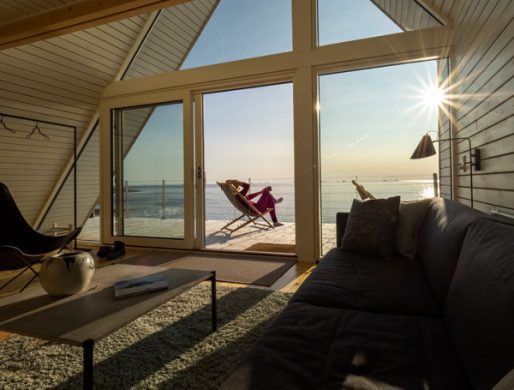
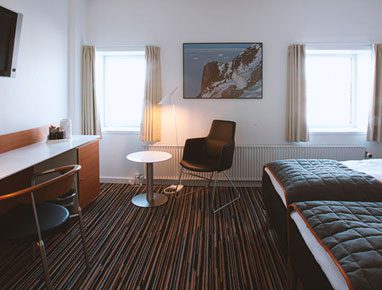
We settle into our accommodation in the village and can look forward to spending several days in these extraordinary surroundings. In the evening, we enjoy dinner at the hotel followed by a good night’s sleep – tomorrow, a hike awaits!